


The loyalty playbook is being rewritten. Here are the trends already changing how Shopify brands build repeat customers, and where the field is heading by 2030.
- Loyalty programs in 2026 are shifting from passive points accumulation to active, personalised reward mechanics that change real behaviour.
- Receipt rewards, AI-driven personalisation and offline-to-online capture are the three forces with the most immediate impact for Shopify brands.
- By 2030, the brands with a first-party purchase data advantage will outcompete on retention; building that data asset starts now.
Loyalty programs have existed in some form for decades, but the version most brands are running today looks a lot like the one they would have run ten years ago: spend money, earn points, redeem points, repeat. That model is not broken, but it is being overtaken. A cluster of structural shifts, in consumer expectations, data infrastructure and AI capability, is producing a new generation of loyalty mechanics that are faster, more personal and far better at actually changing purchase behaviour. The brands moving early are building a compounding retention advantage. Here is what is driving it.
Receipt rewards are closing the offline data gap
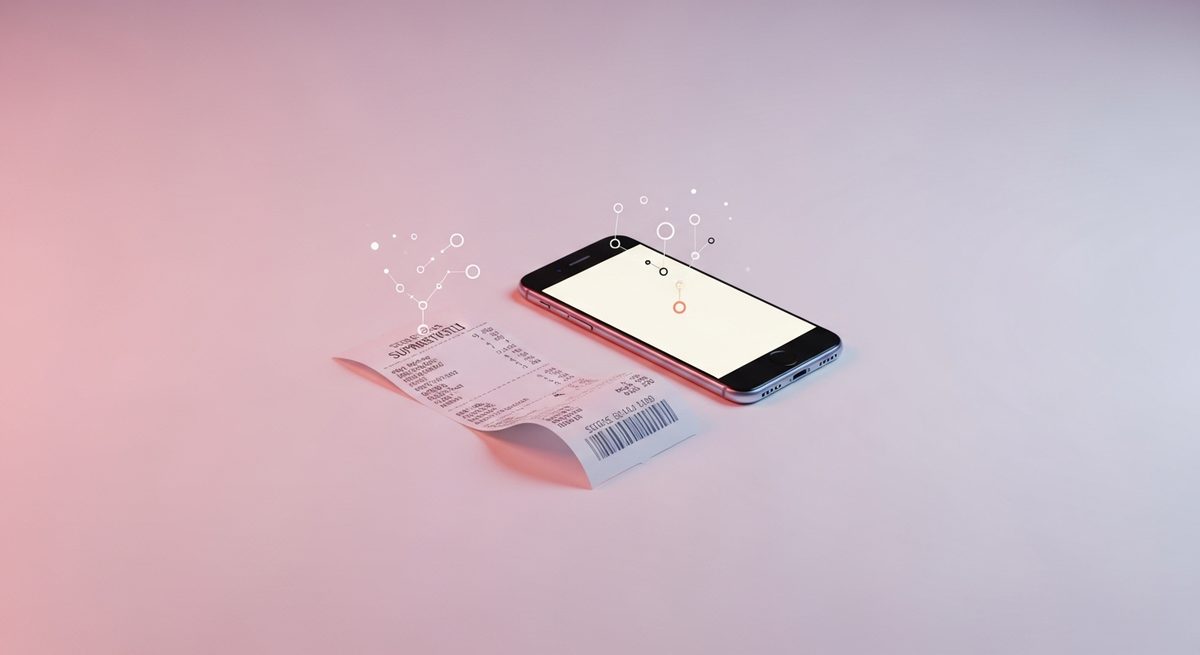
For most Shopify brands, a significant share of purchases happen somewhere other than their own checkout: a supermarket, a pharmacy, a third-party retailer. Traditional loyalty programs simply cannot see those transactions, so those customers remain anonymous and unretained. Receipt rewards change the equation entirely. When a customer submits a photo of their till receipt, an AI engine validates the purchase and issues a reward directly into the brand's ecosystem, whether that is a voucher, a points balance or a discount code redeemable on the Shopify store. The offline purchase, invisible until now, becomes a first-party data point and a trigger for a retention loop. This is the trend with the most immediate practical impact for CPG and omnichannel brands, and it is accelerating. As third-party cookies continue to lose signal, brands that can capture purchase intent directly, wherever it happens, will hold a meaningful data advantage over those waiting at their own checkout.
AI personalisation is moving from segment to individual
Loyalty programs have always used segmentation: VIP tiers, purchase-frequency bands, spend brackets. That logic still has a place, but AI is enabling something more granular. Rather than placing a customer into a category and sending the same reward to everyone in it, platforms can now model each person's purchase cadence, category preferences and redemption history to surface the reward most likely to drive their next purchase specifically. For Shopify brands this matters because the lift from a well-timed, relevant reward is substantially larger than the lift from a generic one. A customer who buys coffee pods every three weeks does not need a reward on week one; they need one on day nineteen, when a restock decision is forming. Getting that timing and content right is no longer a manual operation, it is a model. The brands investing in this now will find the economics of retention improving steadily as the models accumulate more purchase data to learn from.
Experiential rewards are replacing pure discounting
Discounts work, but they train customers to wait for them, and over time they compress margin and erode brand value. A growing number of brands are deliberately moving their loyalty currency away from pure price reductions and toward experiences, access and identity. Early access to new products, invitations to private events, personalised bundles, charitable donations in the customer's name; these rewards carry a perceived value that often exceeds their cost, and they reinforce the brand relationship rather than simply subsidising the transaction. This shift is not about being clever with packaging. It reflects a genuine change in what customers respond to, particularly in the mid-to-premium segment, where being recognised as a valued customer matters as much as saving money. Snap Rewards supports a range of reward types precisely because the right mechanic depends on the brand and the audience, and a single discount lever is rarely the full answer.
Zero-party and first-party data are becoming the core loyalty asset
The most durable outcome of a well-run loyalty program is not the repeat purchase itself; it is the purchase data attached to it. Every validated receipt, every redeemed reward, every product preference surfaced through a campaign is a first-party signal that belongs to the brand, not to a platform or a channel. As advertising signal quality continues to decline and acquisition costs stay elevated, that data asset becomes the foundation for everything from lookalike audience targeting to product ranging decisions. Brands that have been running receipt rewards programs for two years will, by 2028, have a category-level purchase intelligence that competitors relying on aggregated third-party data simply cannot replicate. The trend here is not really about loyalty mechanics in isolation; it is about recognising that a loyalty program is also a data infrastructure investment, and treating it accordingly.
Gamification is maturing into engagement design
Points and tiers were the first generation of loyalty gamification. The next generation is more deliberate: streaks, challenges, milestone unlocks and limited-time reward events designed to create recurring engagement rather than passive accumulation. The distinction matters. Passive accumulation means a customer collects points in the background and checks in occasionally to redeem. Active engagement design means the program itself is a reason to interact with the brand on a cadence you set. Done well, it increases purchase frequency and brand recall. Done poorly, it adds friction and feels manipulative. The brands getting this right are keeping the mechanics simple, making progress visible and ensuring every challenge has a reward worth the effort. The goal is a program customers think about between purchases, not just at checkout.
Snap Rewards gives you the campaign tools to run challenges, milestone rewards and receipt-based promotions from a single dashboard. See how it works →
Cross-channel redemption is becoming table stakes
Customers do not think in channels. They buy online, in-store and through third-party retailers without separating those experiences into distinct relationships. A loyalty program that only recognises purchases made through one channel will feel incomplete to anyone who buys across more than one. By 2030, the expectation will be that rewards earned anywhere in the brand's ecosystem are redeemable everywhere in it. Receipt validation is one of the primary enabling technologies here, because it allows any physical purchase to enter the loyalty loop regardless of where it happened. For Shopify brands this means the online store becomes the redemption hub for a much larger pool of purchase activity, driving traffic and conversion that would otherwise never have reached the store at all.
What the 2030 loyalty landscape looks like from here
The direction is reasonably clear. Programs will be more personal, more data-rich and more channel-agnostic. The brands that will lead on retention in 2030 are the ones building their first-party purchase data asset now, running reward mechanics that change behaviour rather than just acknowledging it, and treating their loyalty program as a growth tool rather than a cost centre. The gap between a loyalty program that decorates a store and one that drives it is not a technology gap; it is a strategic one. The tools to run a genuinely powerful receipt rewards program on Shopify exist today. The question is whether you use them before the next brand in your category does.
Loyalty trend timeline
Receipt rewards go mainstream
Offline purchases enter the loyalty loop for the first time
AI personalisation reaches individual level
Reward timing and content modelled per customer, not per segment
First-party data becomes a retention moat
Brands with two-plus years of purchase data outcompete on LTV
Cross-channel redemption is the baseline expectation
Earn anywhere, redeem everywhere: customers expect it as standard
The four milestones that define the loyalty roadmap from today to 2030.
The brands with a first-party purchase data advantage will outcompete on retention by 2030. Building that asset starts with the next transaction.
Snap Rewards is a receipt rewards and loyalty platform for Shopify brands, turning everyday purchases into repeat customers. Install in an afternoon, capture offline buyers and start growing your first-party data asset from your first campaign.
Get started freeBook a demo